Table of Contents
- applicant tracking software for small business: why it matters
- Key features of applicant tracking software for small business
- Choosing the right applicant tracking software for small business
- Integration considerations for applicant tracking software for small business
- Implementation best practices
- Data migration tips
- Measuring success with applicant tracking software for small business
- Future trends and scalability
Running a small business often means wearing many hats—owner, manager, accountant, and sometimes even the receptionist. When it comes to hiring, the process can quickly become overwhelming. From posting job ads to sorting résumés, interviewing candidates, and keeping records, each step consumes valuable time that could be spent growing the core business. This is where applicant tracking software for small business steps in as a silent partner, handling the repetitive tasks and allowing entrepreneurs to focus on strategic decisions.
Unlike enterprise‑level HR suites that come with a hefty price tag and a steep learning curve, modern applicant tracking tools are built with simplicity and affordability in mind. They are cloud‑based, easy to configure, and integrate with the everyday apps that small teams already use. As a result, a boutique bakery, a local IT consultancy, or a startup tech firm can all benefit from the same core functionalities without the burden of complex implementation.
In the sections that follow, we’ll explore the essential features to look for, the cost considerations, and practical tips for selecting the right solution. By the end, you’ll have a clear roadmap for adopting applicant tracking software for small business and turning hiring from a chore into a streamlined process.
applicant tracking software for small business: why it matters
At its heart, applicant tracking software for small business is a digital filing cabinet that organizes candidate information in one searchable location. This centralization eliminates the need for scattered email threads, Excel sheets, and sticky notes. When every hiring manager can access the same data, decisions become faster and more consistent.
Beyond organization, the software brings analytics into the hiring equation. Small businesses can track metrics such as time‑to‑fill, source‑of‑hire, and interview‑to‑offer ratios. These insights help refine recruiting strategies, allocate budget more effectively, and ultimately reduce turnover—a critical factor for businesses where each employee wears multiple hats.
Key features of applicant tracking software for small business
- Job posting automation: Publish openings to multiple job boards with a single click, saving hours of manual entry.
- Resume parsing: The system extracts relevant data from résumés and populates candidate profiles, making it easy to search by skills, experience, or location.
- Workflow customization: Design hiring stages that reflect your unique process, whether it’s a simple two‑step interview or a multi‑phase assessment.
- Collaboration tools: Share candidate notes, schedule interviews, and collect feedback from hiring managers within the platform.
- Compliance tracking: Store consent forms and maintain audit trails to meet legal requirements, such as EEOC or GDPR.
- Integration capabilities: Connect with email, calendar, payroll, and other business software to keep data synchronized.
Each of these features addresses a pain point that small businesses commonly face. For instance, a retail shop with seasonal hiring spikes can rely on automated posting to reach job seekers quickly, while a tech startup can use resume parsing to sift through dozens of applications without missing qualified candidates.
Choosing the right applicant tracking software for small business
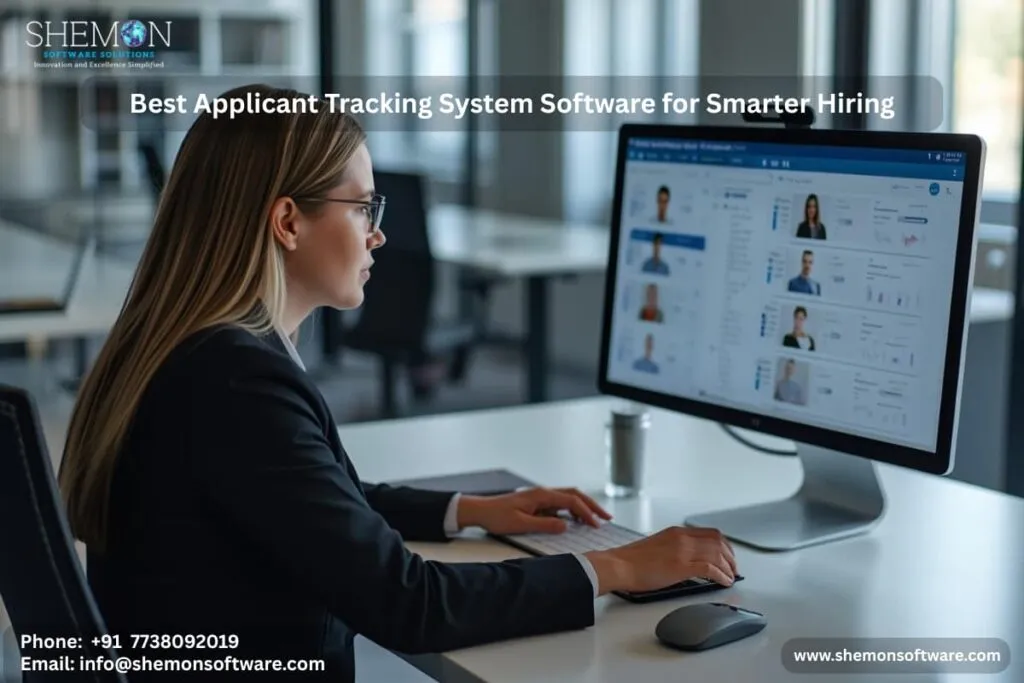
Not every solution fits every organization. Start by assessing your current recruitment workflow and identifying bottlenecks. Do you spend most of your time posting jobs, or is candidate communication the biggest challenge? Once you have a clear picture, match those needs against the capabilities of potential platforms.
Pricing models vary widely. Some vendors charge per user, while others use a flat monthly fee based on the number of active job postings. For a small business, a subscription that scales with growth is often the safest bet. Look for transparent pricing, a free trial, and a clear cancellation policy to avoid hidden costs.
Integration considerations for applicant tracking software for small business
Small teams typically rely on a handful of core tools—accounting software, email, and perhaps a project‑management app. An applicant tracking solution that integrates seamlessly with these systems reduces duplicate data entry and keeps your HR information in sync with finance and operations. For example, linking the ATS with a payroll platform can automatically trigger onboarding workflows once a candidate is hired.
If you already use a cloud‑based accounting solution, you might appreciate how General Ledger Software for Small Business – A Complete Guide explains the importance of software that talks to each other. The same principle applies when choosing an ATS that can exchange data with your existing tools.
Implementation best practices

Even the most intuitive applicant tracking software for small business can stumble during rollout if you overlook a few practical steps. Begin with a pilot phase involving one department or a limited set of users. Gather feedback, adjust workflow settings, and refine permission levels before expanding organization‑wide.
Training is another critical piece. While most modern ATS platforms offer self‑service tutorials, a short live session can address specific questions and demonstrate how to use collaboration features effectively. Encourage hiring managers to adopt consistent tagging and rating methods; this uniformity improves searchability and reporting accuracy.
Data migration tips
- Export existing candidate data from spreadsheets or email folders into CSV format.
- Map columns to the corresponding fields in the new system (e.g., first name, email, resume link).
- Validate a sample import before loading the full dataset to catch any formatting errors.
By treating migration as a quality‑control exercise, you avoid the frustration of missing or duplicated records later on.
Measuring success with applicant tracking software for small business

After the system is live, the real work begins: monitoring performance and making continuous improvements. Use the built‑in dashboards to track key metrics. A reduction in time‑to‑fill by even a week can translate into cost savings, especially when each open position means lost productivity.
Another useful metric is candidate satisfaction. Many ATS platforms let you send automated survey links after interviews. Positive feedback indicates that your communication cadence is effective, while low scores highlight areas for refinement.
Regularly review source‑of‑hire data to determine which job boards or referral programs yield the highest quality candidates. Redirecting budget toward the most productive channels maximizes ROI—a principle echoed in the broader context of Field Service Software that Integrates with QuickBooks – A Complete Guide, where integration and data analysis drive smarter spending.
Future trends and scalability

As your business grows, so will your hiring needs. Modern applicant tracking software for small business is built to scale, offering advanced features like AI‑driven candidate matching, video interview integration, and multi‑language support. While these capabilities may not be essential today, selecting a platform with a clear upgrade path ensures you won’t outgrow the system in a few years.
Artificial intelligence is beginning to play a larger role in screening résumés, highlighting candidates whose experience aligns closely with job descriptions. Small businesses can leverage this technology without the overhead of a dedicated data science team, thanks to cloud‑based ATS providers who embed AI as part of their standard offering.
In addition, the rise of remote work has increased demand for virtual onboarding tools. An ATS that can trigger welcome emails, share digital paperwork, and schedule virtual orientation sessions helps maintain a consistent candidate experience, regardless of geography.
Ultimately, the goal of any applicant tracking software for small business is to create a hiring engine that runs smoothly, scales with growth, and frees up the entrepreneurial mind to focus on strategy rather than paperwork.
Adopting the right solution involves understanding your specific hiring challenges, evaluating features and pricing, and committing to a thoughtful implementation plan. By following the guidelines outlined above, small business owners can transform their recruitment process from a series of manual chores into a streamlined, data‑driven operation.