Table of Contents
- Effective resource allocation in software project management
- Key principles of resource allocation in software project management
- Assessing resource capacity and skill sets
- Prioritizing tasks with the help of risk analysis
- Balancing internal and external resources
- Utilizing software tools for allocation tracking
- Iterative re‑allocation during the project lifecycle
- Measuring the impact of allocation decisions
- Case study: Scaling a mid‑size SaaS product
- Best practices checklist for resource allocation in software project management
Managing a software project is comparable to conducting an orchestra. Every instrument—developers, designers, testers, and tools—must play at the right time and volume to produce a harmonious product. The conductor’s baton in this scenario is the practice of resource allocation. When a project manager thoughtfully distributes people, time, and technology, the likelihood of meeting deadlines, staying within budget, and achieving quality rises dramatically.
However, resource allocation is rarely a one‑time decision. It evolves with changing requirements, emerging risks, and the inevitable surprises that accompany software development. Understanding the dynamics of how resources are assigned, re‑assigned, and optimized can transform a chaotic sprint into a predictable delivery cycle. This article walks through the essential concepts, practical techniques, and tools that support effective resource allocation in software project management.
Throughout the discussion, you will encounter real‑world examples and actionable tips that can be applied today—whether you are leading a small startup team or steering a multi‑national development program. Let’s begin by setting the stage for why disciplined resource allocation matters.
Effective resource allocation in software project management
At its core, resource allocation in software project management involves matching the right skills and capacities to the tasks that need to be completed. This matching process must consider multiple constraints: budget limits, skill availability, project timelines, and quality standards. When these variables are balanced, teams experience fewer bottlenecks, lower turnover, and higher morale.
The process typically starts with a detailed work breakdown structure (WBS) that decomposes the project into manageable work packages. Each package is then evaluated for effort, required expertise, and dependencies. By mapping these attributes against the available pool of resources, managers can generate a realistic allocation plan that guides the project from inception through closure.
Key principles of resource allocation in software project management
- Visibility: Maintain a transparent view of all resources—people, tools, and budget—through a centralized dashboard.
- Flexibility: Build contingency buffers to accommodate scope changes or unforeseen technical challenges.
- Alignment: Ensure that resource assignments reflect both project priorities and individual career growth paths.
- Optimization: Use data‑driven insights to minimize idle time and avoid overallocation.
Applying these principles consistently creates a foundation for predictable delivery. For instance, a development team using an agile sprint board can quickly spot when a developer is over‑booked and re‑balance the workload before it impacts the sprint goal.
Assessing resource capacity and skill sets
Before any allocation decision, project managers must gather accurate data on each team member’s capacity—usually expressed in hours per week—and their competency matrix. A simple spreadsheet can capture this information, but many organizations prefer integrated project management tools that automatically update availability based on leave requests, training sessions, or other commitments.
When evaluating skill sets, categorize expertise into tiers (e.g., core, intermediate, advanced) for each technology stack, domain knowledge, and soft skills like communication or leadership. This taxonomy enables quick matching of tasks to the most suitable contributors, reducing the learning curve and error rate.
Prioritizing tasks with the help of risk analysis
Risk analysis and resource allocation are intertwined. High‑risk tasks—those with uncertain technical solutions or tight deadlines—should receive priority in resource planning. Allocating senior engineers or additional testing capacity to these tasks mitigates the chance of costly rework later.
For example, a project that includes a new integration with a third‑party API may assign a senior developer to prototype the connection early in the timeline. This proactive approach uncovers compatibility issues sooner, allowing the schedule to absorb any necessary adjustments without jeopardizing downstream activities.
Balancing internal and external resources
Many software projects rely on a mix of in‑house staff and external contractors or vendors. Balancing these resources requires clear communication of expectations, deliverables, and quality standards. Contracts should specify ramp‑up and ramp‑down periods, as well as knowledge‑transfer obligations to avoid “knowledge silos.”
When integrating external talent, consider using a practical guide to hiring software developers abroad to streamline onboarding and align cultural expectations. This ensures that the external contributors become seamless extensions of the internal team rather than isolated units.
Utilizing software tools for allocation tracking
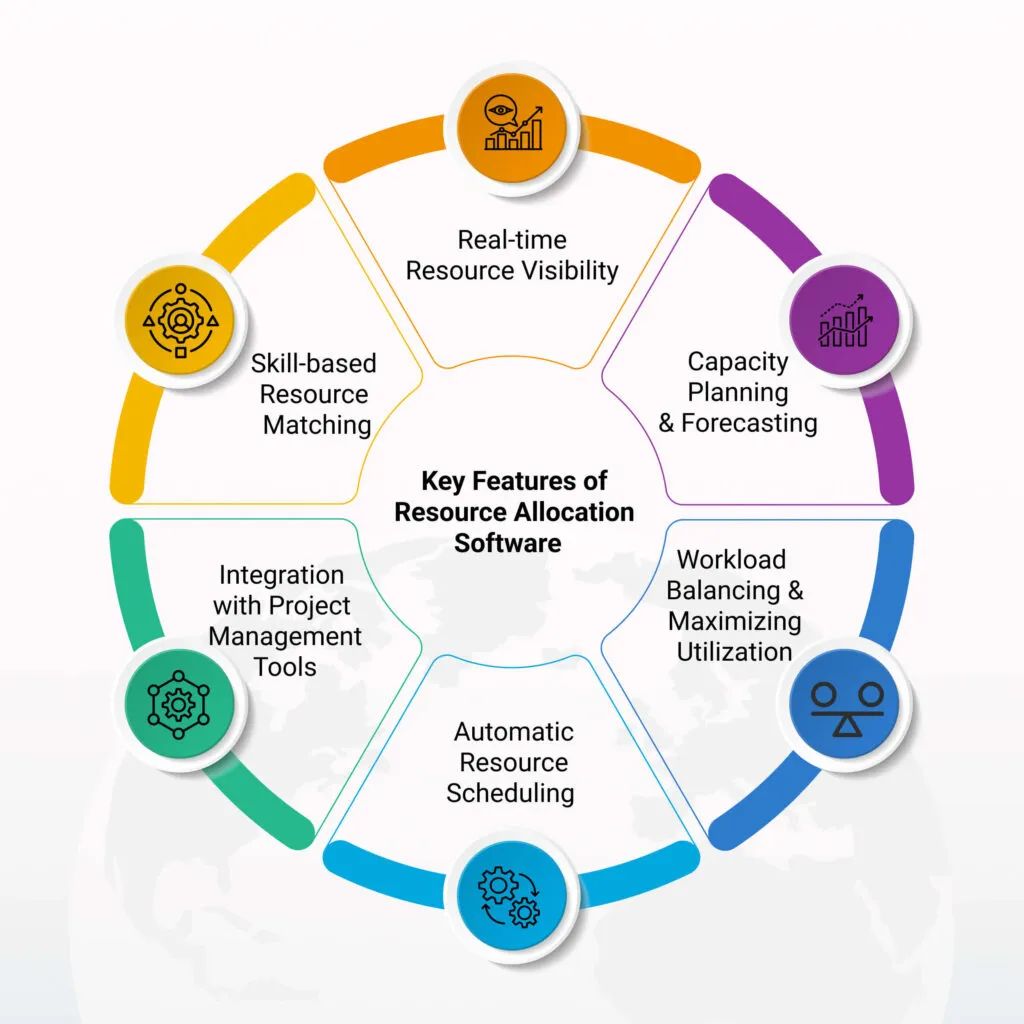
Modern project management platforms provide features such as resource histograms, capacity planning modules, and real‑time utilization reports. Tools like Microsoft Project, Jira Portfolio, or cloud‑based solutions can automatically flag overallocation and suggest alternative assignments. These insights help maintain a healthy workload distribution and support data‑driven decision making.
In addition to generic PM tools, domain‑specific applications—such as property management software for real‑estate teams—often include built‑in resource scheduling tailored to industry workflows. Selecting the right toolset reduces manual effort and improves accuracy.
Iterative re‑allocation during the project lifecycle
Software development is inherently iterative. As sprints conclude and retrospectives surface new insights, the resource allocation plan should be revisited. Re‑allocation may involve shifting developers to address newly discovered bugs, moving QA resources to support a release candidate, or reallocating budget toward performance testing tools.
Agile frameworks support this fluidity by encouraging regular backlog grooming and sprint planning sessions. During these ceremonies, the team collectively assesses whether the current allocation aligns with the upcoming sprint goals and makes adjustments as needed.
Measuring the impact of allocation decisions
Key performance indicators (KPIs) help quantify the effectiveness of resource allocation in software project management. Common metrics include:
- Utilization rate: Percentage of allocated hours versus available hours.
- Cycle time: Duration from task start to completion, reflecting efficiency.
- Defect leakage: Number of defects found post‑release, indicating testing adequacy.
- Team satisfaction: Survey scores that capture morale and perceived workload fairness.
Tracking these metrics over multiple releases provides a baseline for continuous improvement. If utilization spikes consistently above 85 %, it may signal over‑allocation and the need for additional hiring or process refinement.
Case study: Scaling a mid‑size SaaS product
A mid‑size SaaS company embarked on a major version upgrade while maintaining existing service levels. The project manager began by mapping out all features, estimating effort, and aligning each with the skill matrix of a 25‑person engineering team. Using a capacity planning tool, the manager identified that two senior backend engineers were over‑allocated, while a junior front‑end developer had idle capacity.
To address this, the manager re‑allocated a portion of the backend work to a newly contracted developer with relevant experience, freeing the senior engineers to focus on critical performance optimizations. Simultaneously, the junior developer received mentorship and was assigned UI refinements that matched their skill level. Throughout the project, weekly utilization reports highlighted a balanced workload, and the release was delivered on schedule with a 20 % reduction in post‑release defects compared to the previous version.
Best practices checklist for resource allocation in software project management
- Develop a comprehensive skill matrix and keep it up to date.
- Use a work breakdown structure to define clear work packages.
- Align resource assignments with both project priorities and individual development goals.
- Incorporate risk assessment early to prioritize high‑impact tasks.
- Leverage automated tools for real‑time capacity monitoring.
- Plan for flexibility with contingency buffers and agile re‑allocation cycles.
- Measure utilization, cycle time, defect rates, and team satisfaction regularly.
- Document lessons learned and refine the allocation process for future projects.
By adhering to this checklist, organizations can institutionalize a disciplined approach to resource allocation that scales with project complexity and team size.
In the rapidly evolving landscape of software development, the ability to allocate resources wisely distinguishes successful projects from those that falter under pressure. Whether you are orchestrating a small feature rollout or steering a multi‑year enterprise transformation, the principles outlined here provide a roadmap for making informed, agile, and humane allocation decisions. As teams continue to adopt new methodologies and tools, the core tenet remains unchanged: matching the right people, time, and technology to the right tasks creates the conditions for delivering value, on schedule, and within budget.