Table of Contents
- Why performance management software for small business matters
- Key features of performance management software for small business
- Choosing the right solution for your small business
- Assess your budget and pricing model
- Evaluate ease of implementation
- Check for scalability
- Integrating performance management with other business tools
- Linking to payroll and HR solutions
- Connecting with project management platforms
- Best practices for rolling out performance management software for small business
- Measuring the impact of performance management software for small business
- Common challenges and how to overcome them
- Fear of micromanagement
- Inconsistent usage
- Data overload
- Future trends in performance management for small businesses
Running a small business means juggling many responsibilities at once—sales, operations, finance, and people management. While the owner often wears multiple hats, maintaining a clear view of employee performance can quickly become overwhelming. Traditional spreadsheets or informal check‑ins rarely provide the consistency needed to grow a motivated workforce. That is where performance management software for small business steps in, offering a structured yet flexible way to set goals, track progress, and give feedback without demanding a large HR department.
Unlike enterprise‑level platforms that come with hefty price tags and complex implementations, solutions aimed at small businesses focus on ease of use, affordability, and quick deployment. They blend core functions—goal setting, continuous feedback, performance reviews, and analytics—into a single dashboard that anyone can navigate. By automating routine tasks, these tools free up valuable time for owners and managers to focus on strategic initiatives rather than administrative overhead.
In the sections that follow, we explore the essential reasons to adopt performance management software for small business, the key features to look for, and practical steps for a smooth rollout. Along the way, we’ll also point out related tools such as project management software and online payroll software that often complement a performance solution in a growing organization.
Why performance management software for small business matters
Small businesses thrive on agility, but that same agility can be compromised when performance processes are ad‑hoc. A dedicated software platform introduces several advantages that align with the fast‑paced nature of a small enterprise:
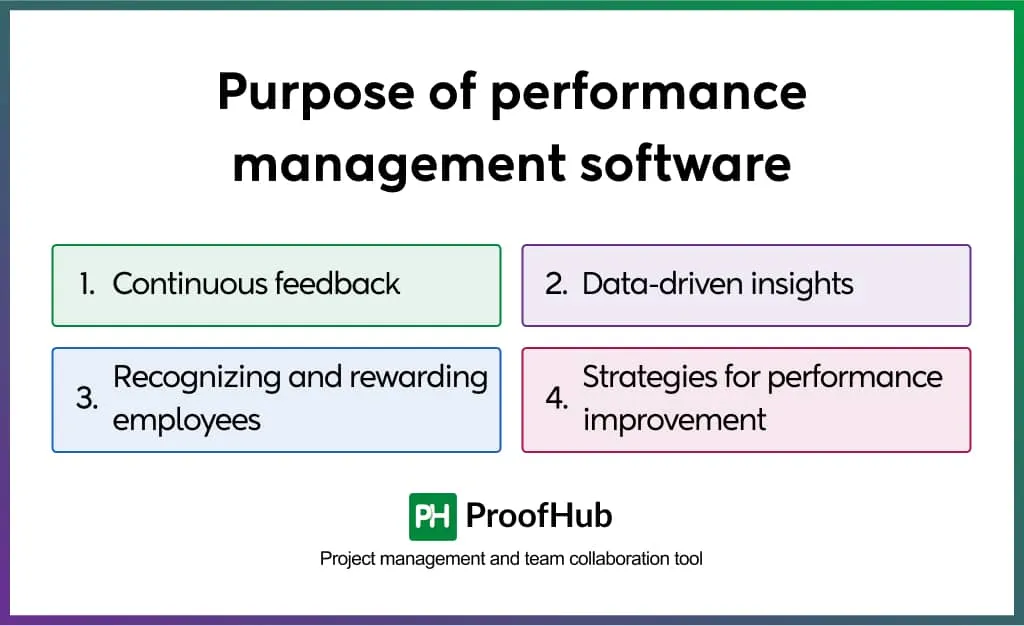
- Visibility: Managers instantly see who is meeting targets, who needs support, and where bottlenecks arise.
- Consistency: Standardized review cycles and rating scales remove bias and ensure fairness across the team.
- Engagement: Real‑time feedback and recognition keep employees motivated, reducing turnover—a critical metric for small firms.
- Data‑driven decisions: Built‑in analytics turn qualitative observations into actionable insights for future hiring and training.
These benefits translate directly into measurable business outcomes: higher productivity, better customer service, and a clearer path for scaling operations.
Key features of performance management software for small business
When evaluating options, focus on features that deliver maximum impact without overcomplicating the workflow. The most valuable capabilities typically include:
- Goal Management: Allows teams to set SMART objectives that align with company strategy, with automatic reminders and progress tracking.
- Continuous Feedback: Enables quick, informal comments and praise, fostering a culture of open communication.
- Performance Reviews: Provides templates for quarterly or annual evaluations, complete with rating scales, self‑assessments, and manager comments.
- 360‑Degree Feedback: Collects input from peers, subordinates, and supervisors, giving a holistic view of an employee’s impact.
- Analytics & Reporting: Generates dashboards that highlight trends, skill gaps, and high‑performing individuals.
- Integration Capability: Connects with existing HRIS, payroll, or project management tools to avoid duplicate data entry.
Most platforms also offer mobile apps, ensuring that feedback can be given on the fly, whether a manager is in the field or working remotely.
Choosing the right solution for your small business
Not every performance management software fits every small business. The selection process should begin with a clear inventory of needs and constraints.
Assess your budget and pricing model
Many vendors offer tiered pricing based on the number of users or features. Look for subscription models that charge per employee per month, with a free trial that lets you test core functionalities before committing. Beware of hidden costs such as implementation fees or mandatory add‑ons that can quickly inflate the total expense.
Evaluate ease of implementation
Time is a scarce resource for small teams. Solutions that provide pre‑configured templates, guided onboarding, and responsive customer support reduce the learning curve. A platform that can be up and running within a few days—rather than weeks—will minimize disruption.
Check for scalability
Even if your current headcount is modest, you likely have growth plans. Choose software that can add users, new departments, or advanced modules (like compensation planning) without requiring a complete migration.
Integrating performance management with other business tools

Performance management does not exist in a vacuum. When paired with complementary systems, it creates a seamless employee lifecycle.
Linking to payroll and HR solutions
Integrations with HR and payroll software for small business allow compensation adjustments to be tied directly to performance outcomes. This ensures that raises, bonuses, or merit increases are based on objective data rather than informal discussions.
Connecting with project management platforms
Project management software already tracks task completion and deadlines. By syncing performance goals with project milestones, managers can see how individual contributions affect larger initiatives, turning data into a narrative of success.
Best practices for rolling out performance management software for small business
A successful implementation is as much about people as it is about technology. Follow these steps to embed the new system into your daily routine:
- Leadership endorsement: When owners and senior managers champion the platform, adoption rates climb dramatically.
- Clear communication: Explain why the tool is being introduced, how it will benefit employees, and what the expected timeline looks like.
- Training sessions: Offer short, hands‑on workshops that cover goal setting, giving feedback, and running reviews.
- Pilot program: Start with a single department or a small group, gather feedback, refine processes, then expand organization‑wide.
- Continuous improvement: Use analytics to identify bottlenecks in the review cycle and adjust forms or timelines accordingly.
Remember that performance management is an ongoing journey. Regularly revisiting goals, celebrating achievements, and adjusting expectations keep the system relevant and valuable.
Measuring the impact of performance management software for small business
After a few months of usage, the true value of the platform becomes apparent through quantifiable metrics:
- Goal completion rate: Percentage of objectives met versus set.
- Employee engagement scores: Survey results that often improve when feedback loops are transparent.
- Turnover reduction: Lower attrition rates indicate that employees feel recognized and fairly evaluated.
- Productivity gains: Correlation between high‑performer identification and increased output.
These data points not only validate the investment but also provide a compelling story for stakeholders, potential investors, or future hires.
Common challenges and how to overcome them
Even the most well‑designed software can encounter resistance. Anticipating obstacles helps maintain momentum.
Fear of micromanagement
Employees may worry that constant tracking feels intrusive. Emphasize that the platform is a tool for empowerment, not surveillance. Highlight features like peer recognition and self‑assessment that give individuals control over their narrative.
Inconsistent usage
If managers skip regular check‑ins, the system loses relevance. Set calendar reminders, tie feedback activities to existing meetings, and reward managers who consistently use the tool.
Data overload
Too many metrics can drown decision‑makers. Focus on a handful of key performance indicators (KPIs) aligned with strategic goals, and use dashboards that surface the most critical insights.
Future trends in performance management for small businesses
Technology continues to reshape how small firms handle employee performance. Emerging trends include:
- AI‑driven insights: Predictive analytics that flag potential disengagement before it becomes a turnover issue.
- Continuous performance conversations: Shift from annual reviews to real‑time dialogues powered by chat integrations.
- Gamification: Badges, leaderboards, and reward systems that boost participation and motivation.
- Holistic wellness integration: Linking performance data with wellbeing metrics to support a healthier workforce.
Adopting a platform that can evolve with these innovations ensures that your small business stays competitive and ready for the next wave of HR technology.
In summary, performance management software for small business offers a practical route to align employee efforts with company objectives, streamline reviews, and generate actionable insights—all while respecting the limited resources typical of a growing organization. By selecting a solution that balances cost, usability, and scalability, integrating it with existing tools, and following proven rollout practices, owners can cultivate a high‑performing culture that fuels sustainable growth. The journey begins with a clear commitment to data‑driven people management, and the payoff is a more engaged team ready to meet the challenges of tomorrow.