Table of Contents
- Why payroll software for medium sized business is a strategic necessity
- Key features to look for in payroll software for medium sized business
- Scalability of payroll software for medium sized business
- Compliance and tax management
- Integration capabilities
- User experience and self‑service
- Implementation tips for payroll software for medium sized business
- Conduct a thorough data audit
- Map existing processes to the new system
- Pilot with a single department
- Provide comprehensive training
- Maintain parallel runs for the first two cycles
- Choosing the right payroll solution for medium sized business
- Cost structure and total cost of ownership
- Vendor reputation and customer support
- Security and data privacy
- Future‑proofing
Running a medium sized business means juggling a growing workforce, tightening regulations, and the constant pressure to keep operating costs under control. Payroll, once a simple spreadsheet task, now sits at the intersection of finance, human resources, and technology. Choosing the right payroll software for medium sized business can turn a cumbersome monthly ritual into a smooth, automated process that frees up time for strategic initiatives.
Unlike the needs of a small startup or a large enterprise, medium sized firms sit in a sweet spot where they require robust functionality without the overhead of enterprise‑grade solutions. The ideal system must handle a moderate number of employees, integrate with existing accounting platforms, and stay ahead of changing tax laws. In the sections that follow, we explore the critical factors that define a successful payroll solution, practical steps for implementation, and how to evaluate vendors to ensure a perfect fit.
Why payroll software for medium sized business is a strategic necessity
Payroll is more than just issuing checks; it is a compliance engine, a data source for financial reporting, and a reflection of employee trust. For a medium sized business, errors in wage calculations or missed tax deadlines can lead to costly penalties and damage morale. Automated payroll reduces human error, accelerates processing cycles, and provides audit trails that satisfy auditors and regulators alike.
Moreover, a modern payroll system connects to time‑tracking, benefits administration, and core HR modules. This integration eliminates duplicate data entry and ensures that every hour worked, every leave taken, and every deduction applied is accurately reflected in the final pay stub. The result is a more reliable payroll run and a clearer view of labor costs across departments.
Key features to look for in payroll software for medium sized business
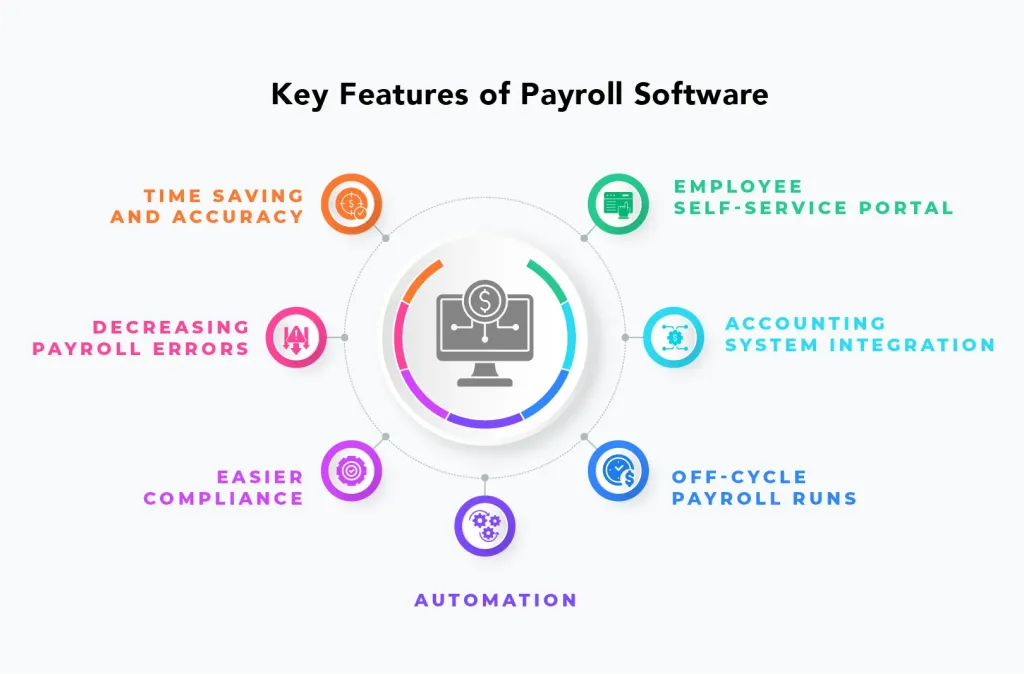
When evaluating options, focus on features that directly address the challenges of a growing organization. Below are the essential capabilities that should be present in any robust solution.
Scalability of payroll software for medium sized business
- Employee limits and tiered pricing: The system should comfortably support 50‑500 employees and allow you to add users without exponential cost increases.
- Multi‑state tax calculations: As your footprint expands, the software must automatically apply the correct state, county, and city tax rates.
- Modular add‑ons: Ability to enable additional modules—such as benefits administration or expense management—without a complete platform overhaul.
Compliance and tax management
- Automatic updates for federal, state, and local tax regulations.
- Built‑in filing for forms like W‑2, 1099, and ACA reporting.
- Audit logs that capture every change made to payroll data.
Integration capabilities
- Seamless connectors to popular accounting software (e.g., QuickBooks, Xero, NetSuite).
- APIs for custom integrations with HRIS or time‑tracking tools.
- Support for direct deposit and third‑party payroll service providers.
User experience and self‑service
- Employee portal for viewing payslips, updating personal information, and requesting time off.
- Mobile‑friendly interface for managers approving timesheets on the go.
- Intuitive dashboards that highlight payroll metrics and compliance alerts.
Implementation tips for payroll software for medium sized business
Deploying a new payroll system is a project that requires careful planning. Even the most feature‑rich software can fall short if the rollout is rushed or poorly communicated.
Conduct a thorough data audit
Before migration, verify that employee records, tax IDs, and benefit elections are accurate. A clean data set prevents mismatches during the first pay cycle and reduces the need for post‑implementation clean‑up.
Map existing processes to the new system
Document each step of your current payroll workflow—from time‑sheet collection to final disbursement—and align those steps with the capabilities of the chosen solution. This exercise helps identify gaps and training needs early on.
Pilot with a single department
Running a pilot in a low‑risk department provides real‑world feedback without jeopardizing the entire payroll schedule. Use the pilot to fine‑tune configurations, test integrations, and gather user input.
Provide comprehensive training
Invest in role‑based training sessions. Payroll administrators need deep system knowledge, while managers and employees benefit from focused tutorials on approvals and self‑service portals. Supplement live sessions with searchable knowledge bases and video tutorials.
Maintain parallel runs for the first two cycles
Run the legacy system side‑by‑side with the new payroll software for the first two pay periods. Compare results, resolve discrepancies, and gain confidence before fully retiring the old process.
Choosing the right payroll solution for medium sized business
The market offers a spectrum of options ranging from on‑premise packages to cloud‑based SaaS platforms. To make an informed decision, evaluate vendors against a checklist that reflects your organization’s priorities.
Cost structure and total cost of ownership
Look beyond the subscription fee. Consider implementation services, training costs, and potential charges for extra integrations or premium support. A transparent pricing model helps avoid surprise expenses down the line.
Vendor reputation and customer support
Read case studies and client testimonials. A vendor that has successfully served other medium sized businesses will likely understand your unique challenges. Additionally, 24/7 support and dedicated account managers can be lifesavers during tax season.
Security and data privacy
Payroll data is highly sensitive. Ensure the provider complies with standards such as ISO 27001, SOC 2, and GDPR (if applicable). Features like role‑based access control, encryption at rest, and regular security audits are non‑negotiable.
Future‑proofing
Ask about the product roadmap. Will the system support emerging payroll trends like gig‑worker classification, blockchain‑based verification, or AI‑driven analytics? A forward‑looking platform reduces the risk of obsolescence.
Finally, compare the shortlisted solutions side by side. Create a scoring matrix that weights each criterion according to its importance to your business. The highest‑scoring option is the one most likely to deliver long‑term value.
While payroll software for medium sized business is a critical investment, it also opens doors to broader HR automation. For instance, integrating with human resources software for small businesses can streamline onboarding, while a link with time and attendance software for small business ensures accurate capture of work hours before they hit the payroll engine. Pairing payroll with AP automation software for small business further consolidates financial workflows, creating a unified ecosystem that scales with growth.
In summary, the right payroll solution transforms a traditionally labor‑intensive function into a strategic asset. By focusing on scalability, compliance, integration, and user experience, medium sized businesses can reduce errors, lower administrative costs, and keep employees satisfied with timely, accurate pay. Thoughtful implementation and diligent vendor selection lay the groundwork for a payroll system that not only meets today’s needs but also evolves alongside the organization.