Table of Contents
- Key Features of Vanguard Target Retirement 2035 Trust II
- Asset Allocation and Glide‑Path Mechanics
- Management Style and Costs
- Risk Profile and Suitability
- Comparing Vanguard Target Retirement 2035 Trust II with Peer Funds
- Expense Ratio Comparison
- Underlying Index Differences
- Tax Considerations for Vanguard Target Retirement 2035 Trust II
- Capital Gains Distributions
- Use of Tax‑Managed Strategies
- How to Incorporate Vanguard Target Retirement 2035 Trust II into a Broader Portfolio
- Supplementing with Fixed‑Income Funds
- Adding an Inflation Hedge
- Reviewing Asset Allocation Annually
- Performance Outlook and Historical Returns
- Decade‑Long Returns
- Scenario Analysis
- Investor FAQs About Vanguard Target Retirement 2035 Trust II
For investors looking toward a retirement horizon around the year 2035, Vanguard offers a purpose‑built solution that blends simplicity with a disciplined glide‑path. The Vanguard Target Retirement 2035 Trust II (the “fund”) is designed to automatically shift from growth‑focused assets to more conservative holdings as the target date approaches. This approach appeals to both seasoned savers and those just beginning to plan for retirement, providing a single‑ticket entry into a diversified portfolio.
Understanding how the Vanguard Target Retirement 2035 Trust II works requires a look at its underlying philosophy, asset allocation, and the mechanisms that keep the fund aligned with an investor’s timeline. By the time the target year arrives, the fund’s composition aims to reduce volatility while preserving capital, allowing retirees to draw down their savings with less market stress.
Key Features of Vanguard Target Retirement 2035 Trust II
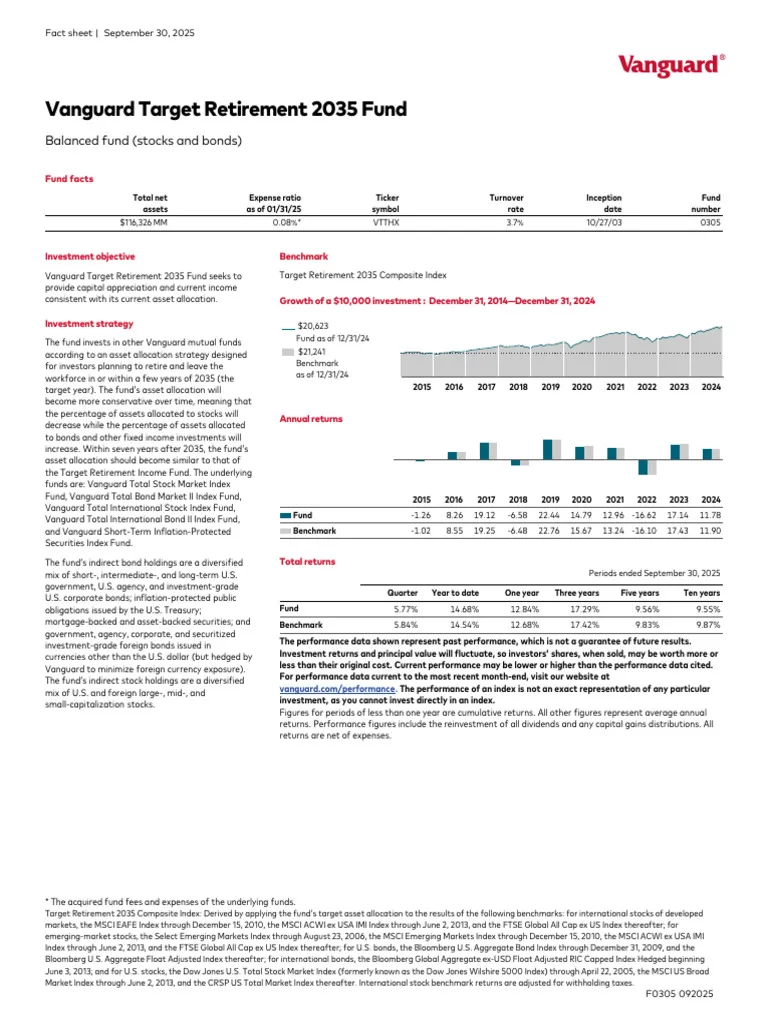
The Vanguard Target Retirement 2035 Trust II is part of Vanguard’s broader series of target‑date funds, each anchored to a specific retirement year. While the 2035 version targets investors roughly 10‑12 years away from retirement, it follows a glide‑path that gradually rebalances the portfolio from an equity‑heavy stance to a more bond‑centric mix.
Asset Allocation and Glide‑Path Mechanics
At inception, the Vanguard Target Retirement 2035 Trust II typically allocates around 80‑85% of its assets to equities, with the remaining 15‑20% in fixed‑income securities. The equity portion is diversified across U.S. large‑cap, mid‑cap, small‑cap, and international stocks, while the bond side includes both government and corporate bonds of varying maturities.
Each year, the fund reduces its equity exposure by roughly 4‑5 percentage points, shifting those allocations into bonds and short‑duration cash equivalents. By 2035, the portfolio aims for a roughly 50/50 split between stocks and bonds, reflecting a more defensive posture suitable for retirees who need income stability.
Management Style and Costs
Vanguard manages the fund with a passive, index‑based approach, seeking to match the performance of broadly diversified benchmarks. This strategy helps keep expense ratios low, a hallmark of Vanguard’s offering. The Vanguard Target Retirement 2035 Trust II’s expense ratio typically sits below 0.15%, making it an attractive option for cost‑conscious investors.
Risk Profile and Suitability
The fund’s risk profile evolves over time. Early on, its high equity allocation subjects investors to market volatility, which can be mitigated by a long investment horizon. As the target date nears, the shift toward bonds reduces sensitivity to market swings, aligning with the lower risk tolerance of retirees.
Investors who prefer a “set‑and‑forget” solution often find the Vanguard Target Retirement 2035 Trust II suitable. However, those with specific income needs or unique tax considerations might benefit from consulting a chartered retirement planning counselor to tailor their strategy.
Comparing Vanguard Target Retirement 2035 Trust II with Peer Funds
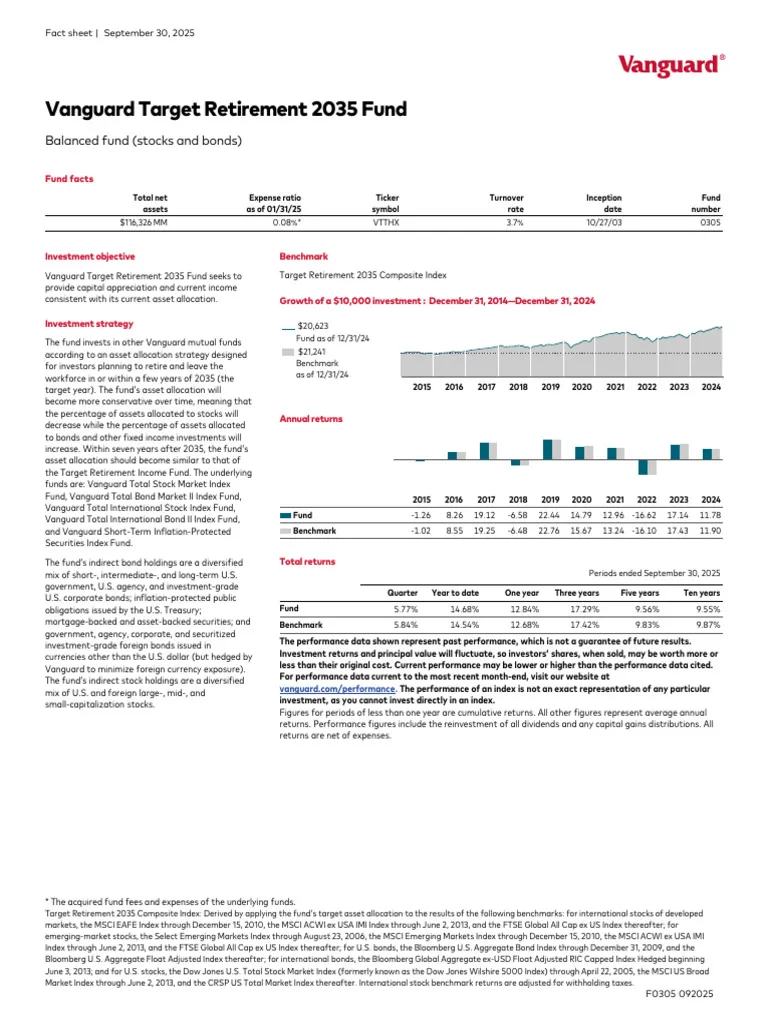
When evaluating the Vanguard Target Retirement 2035 Trust II, it’s useful to compare it with similar offerings from other providers. For instance, the State Street Target Retirement 2030 Fund follows a comparable glide‑path but may have different expense ratios and underlying index choices.
Expense Ratio Comparison
Vanguard’s reputation for low fees is evident in the Vanguard Target Retirement 2035 Trust II’s sub‑0.15% expense ratio, which is generally lower than many peer funds. Lower costs translate into higher net returns over the long term, especially when compounded over a decade or more.
Underlying Index Differences
While Vanguard primarily tracks its own proprietary indices, other firms might rely on MSCI or FTSE benchmarks. These variations can lead to slight differences in sector exposure, international allocation, and overall performance. Investors should review each fund’s prospectus to understand the nuances.
Tax Considerations for Vanguard Target Retirement 2035 Trust II
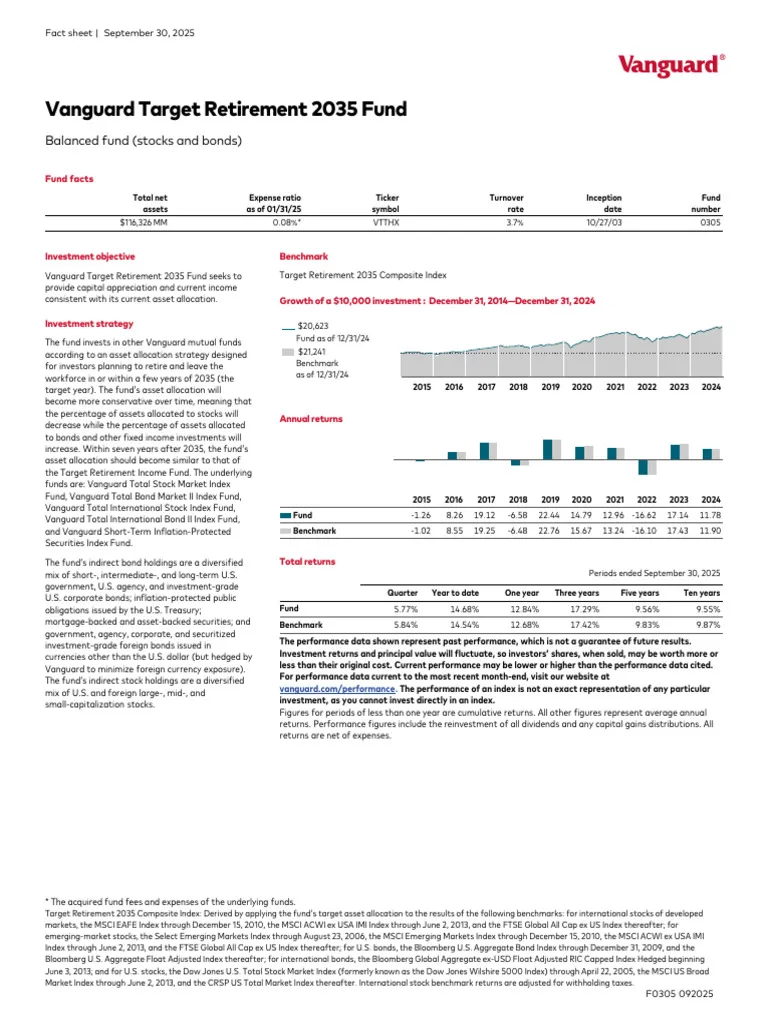
Tax efficiency is a critical factor for retirement accounts. The Vanguard Target Retirement 2035 Trust II is structured as a mutual fund, meaning that capital gains distributions can affect taxable accounts. However, when held inside tax‑advantaged vehicles such as 401(k)s or IRAs, the impact is minimized.
Capital Gains Distributions
Because the fund employs an index‑funding approach, turnover is relatively low, which generally reduces the frequency of capital gains distributions. Nonetheless, investors should be aware of the potential for year‑end distributions that could affect their tax bill if the fund is held in a taxable brokerage account.
Use of Tax‑Managed Strategies
Vanguard does not currently employ a dedicated tax‑managed version of the Target Retirement 2035 Trust II. Investors seeking more aggressive tax‑loss harvesting might consider a separate tax‑efficient fund or consult a third‑party administrator for retirement plan to explore advanced strategies.
How to Incorporate Vanguard Target Retirement 2035 Trust II into a Broader Portfolio
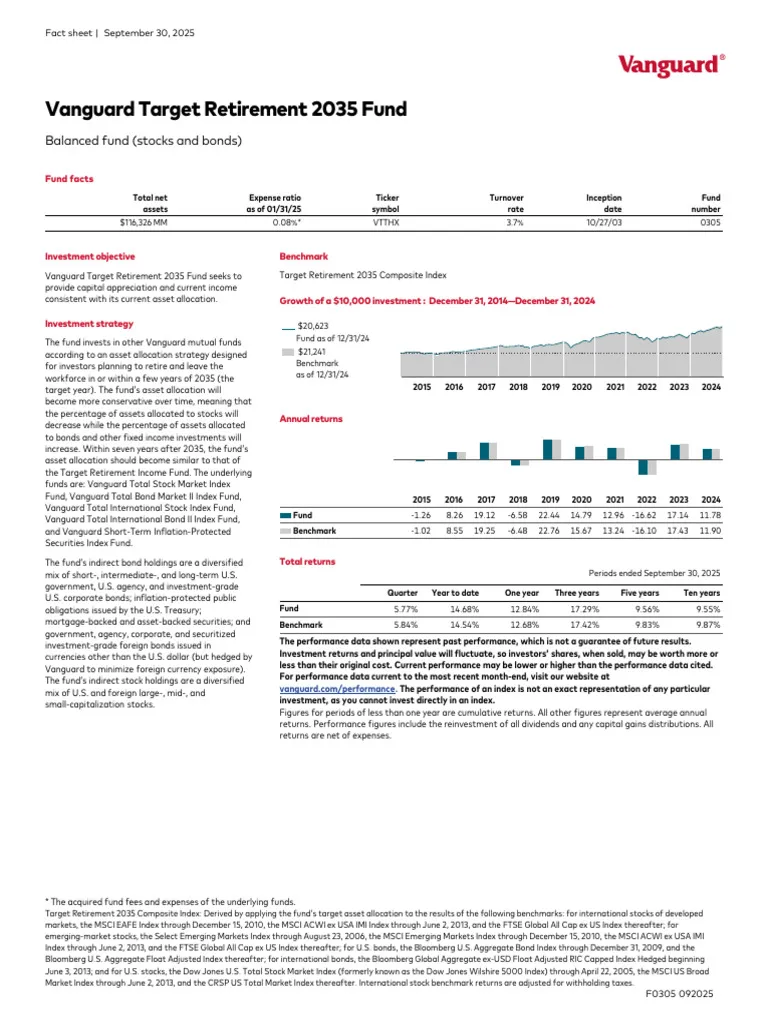
Even though the Vanguard Target Retirement 2035 Trust II offers a diversified, all‑in‑one solution, many investors choose to complement it with other assets to address specific goals, such as higher income, liquidity, or alternative exposure.
Supplementing with Fixed‑Income Funds
As the glide‑path shifts toward bonds, some investors add dedicated bond funds to fine‑tune duration or credit risk. For those approaching retirement, a short‑term municipal bond fund might provide tax‑free income, complementing the fund’s existing bond allocation.
Adding an Inflation Hedge
Long‑term investors often consider including an inflation‑protected security, such as TIPS or real‑estate investment trusts (REITs), to safeguard purchasing power. While the Vanguard Target Retirement 2035 Trust II includes some inflation exposure through its equity holdings, a targeted allocation can enhance protection.
Reviewing Asset Allocation Annually
Even with a built‑in glide‑path, it’s prudent to review the overall asset allocation at least once a year. Life events, changes in risk tolerance, or shifts in market conditions may warrant adjustments. For a deeper dive into a similar fund, see the Vanguard Target Retirement 2025 Trust Select – Comprehensive Overview.
Performance Outlook and Historical Returns

Historical performance provides context, though past results do not guarantee future outcomes. Over the past decade, Vanguard’s target‑date series has generally delivered returns in line with the broader market, with the equity portion driving growth and the bond portion providing stability.
Decade‑Long Returns
From 2012 to 2022, funds similar to the Vanguard Target Retirement 2035 Trust II posted average annual returns of roughly 8‑9%, reflecting the strong equity markets of that period. As the fund progresses toward 2035, the expected return will gradually decline in line with the increased bond weighting.
Scenario Analysis
Financial planners often model different market scenarios—bull, bear, and moderate—to assess how the fund might perform under varying conditions. In a prolonged bear market, the fund’s later‑stage bond allocation helps cushion losses, while in a bull market, the early‑stage equity focus captures upside.
Investor FAQs About Vanguard Target Retirement 2035 Trust II
- Who should consider the Vanguard Target Retirement 2035 Trust II? Investors with a retirement horizon around 2035 who prefer a hands‑off approach.
- Can I withdraw money before 2035 without penalty? Yes, but early withdrawals may be subject to market risk and potential fees depending on the account type.
- How often does the fund rebalance? The fund automatically rebalances its asset mix annually to stay on glide‑path.
- Is there a minimum investment? Typically, Vanguard requires a minimum initial investment of $1,000 for most target‑date funds.
- What happens after 2035? The fund transitions to a “lifecycle” phase, maintaining a conservative allocation suitable for retirement income.
Investors who need a more tailored approach may explore alternative vehicles, but for many, the Vanguard Target Retirement 2035 Trust II offers a balanced mix of growth potential and risk mitigation that aligns with a typical retirement timeline.
In summary, the Vanguard Target Retirement 2035 Trust II stands out for its low cost, disciplined glide‑path, and broad diversification. By understanding its structure, risks, and how it fits within a larger retirement plan, investors can make informed decisions that support a smoother transition into retirement. Whether you are just starting to save or are already in the accumulation phase, the fund’s automated rebalancing and clear target date provide a straightforward path toward your 2035 retirement goals.