Table of Contents
- Why SSD Matters for VPS Performance
- Reduced I/O Wait Times
- Improved Reliability
- Scalable I/O Capacity
- Understanding High Bandwidth and Its Benefits
- Accommodating Traffic Spikes
- Supporting Multimedia Content
- Enabling Real‑Time Applications
- Choosing the Right VPS Provider for SSD and Bandwidth
- Hardware Transparency
- Network Architecture
- Management Options
- Scalability Pathways
- Optimizing Your VPS for Maximum Efficiency
- Operating System and File System Choice
- Web Server Configuration
- Database Tuning
- Security Practices
- Common Use Cases for SSD‑Powered High‑Bandwidth VPS
- WordPress Hosting at Scale
- E‑Commerce Platforms
- Data Analytics and Machine Learning
- Enterprise SaaS Applications
In today’s digital landscape, speed and reliability are no longer optional—they are essential. A VPS server with SSD and high bandwidth delivers both, offering a solid foundation for everything from e‑commerce platforms to data‑intensive applications. This article walks you through the technical advantages, selection criteria, and real‑world scenarios where such a VPS can make a measurable difference.
Imagine a bustling marketplace where each stall represents a website or service. If the pathways between stalls are narrow and the stalls themselves are built on shaky foundations, customers will stumble, hesitate, or leave altogether. Replace those cramped lanes with wide, high‑capacity roads, and reinforce each stall with a sturdy, fast‑acting structure—that’s precisely what an SSD‑backed, high‑bandwidth VPS does for your online presence.
Throughout this narrative, we’ll explore the key components that define a high‑performance VPS, how they interact, and what you should look for when making a purchasing decision. By the end, you’ll have a clear roadmap for leveraging this technology without getting lost in jargon.
Why SSD Matters for VPS Performance

Solid‑State Drives (SSDs) have replaced traditional spinning hard drives in most modern servers because they provide faster data access, lower latency, and greater durability. For a VPS, the impact of SSD storage can be broken down into three core areas:
Reduced I/O Wait Times
- SSD read/write operations occur in microseconds, compared to milliseconds for HDDs.
- This reduction translates directly into quicker page loads and faster database queries.
- Web applications that rely on frequent file access, such as content management systems, see noticeable performance gains.
Improved Reliability
- Without moving parts, SSDs are less prone to mechanical failure.
- Higher Mean Time Between Failures (MTBF) means fewer unexpected downtimes.
- For businesses that cannot afford interruptions, this reliability is a decisive factor.
Scalable I/O Capacity
- Modern SSDs support parallel operations, allowing multiple processes to read and write simultaneously.
- This concurrency is essential for multi‑tenant VPS environments where several applications run side by side.
- When combined with high bandwidth, the overall data pipeline becomes smoother and more predictable.
For a deeper dive into how SSDs affect scalability, you might find the guide Unlock Unlimited Growth: The Complete Guide to Scalable VPS Hosting With Root Access particularly useful.
Understanding High Bandwidth and Its Benefits
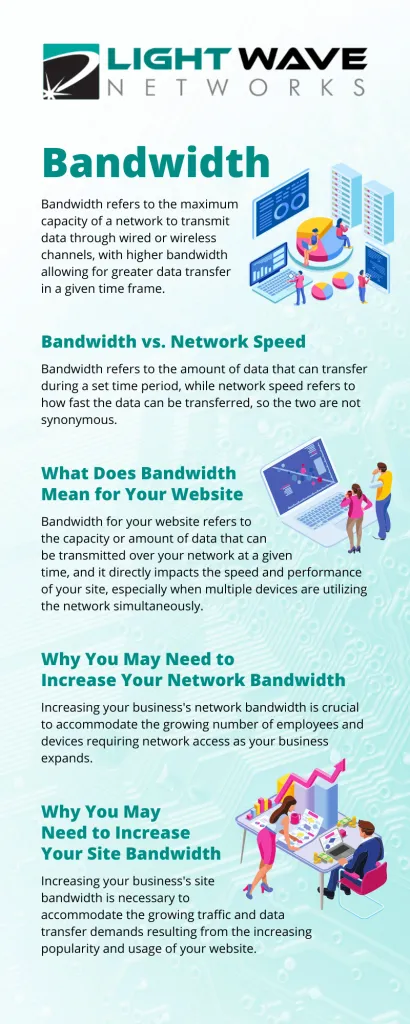
Bandwidth defines the amount of data that can travel to and from your server each second. While latency measures the speed of individual data packets, bandwidth determines the volume that can be handled concurrently. A VPS with high bandwidth offers several tangible benefits:
Accommodating Traffic Spikes
- Marketing campaigns, product launches, or seasonal demand can cause sudden surges.
- High bandwidth ensures that these spikes do not throttle the user experience.
- Businesses can maintain conversion rates even during peak periods.
Supporting Multimedia Content
- Streaming video, high‑resolution images, and large file downloads consume substantial data.
- With ample bandwidth, media‑rich sites deliver smooth playback without buffering.
- Content delivery networks (CDNs) can offload some traffic, but the origin VPS still benefits from a robust pipe.
Enabling Real‑Time Applications
- Online gaming, live chat, and financial trading platforms require rapid data exchange.
- High bandwidth reduces the chance of packet loss, which can otherwise cause glitches or latency spikes.
- Forex traders, for instance, often rely on low‑latency VPS solutions; see Why Every Serious Forex Trader Needs a VPS Server – The Ultimate Guide to Low‑Latency, Secure Trading for a specialized perspective.
Choosing the Right VPS Provider for SSD and Bandwidth

Selecting a provider is more than a price comparison exercise. You need to assess a mix of technical specifications, support quality, and service guarantees. Below are the most important criteria to evaluate.
Hardware Transparency
- Confirm the exact SSD model (e.g., NVMe vs. SATA) and its IOPS rating.
- Check the advertised bandwidth—whether it’s a “soft limit” with throttling or a true unmetered cap.
- Ask for benchmark results that reflect real‑world workloads.
Network Architecture
- Providers that own or lease high‑capacity backbone connections typically deliver lower latency.
- Multiple peering points reduce the number of hops between your VPS and end users.
- Redundant routing helps keep the service online even if one route fails.
Management Options
- Fully managed VPS plans include OS updates, security patches, and monitoring.
- Unmanaged plans give you full control but demand technical expertise.
- For small businesses, a managed solution can act as a “secret weapon”; read Why Managed VPS Hosting Is the Secret Weapon Small Businesses Need for more insights.
Scalability Pathways
- Ensure the provider allows seamless upgrades of CPU, RAM, SSD size, and bandwidth.
- Look for “pay‑as‑you‑grow” pricing models that avoid abrupt cost jumps.
- Some hosts offer dedicated SSD tiers that can be added without downtime.
Optimizing Your VPS for Maximum Efficiency

Even the best hardware can underperform if not properly tuned. Below are practical steps to extract the full potential of a VPS with SSD and high bandwidth.
Operating System and File System Choice
- Linux distributions such as Ubuntu 22.04 LTS or CentOS Stream are common for VPS environments.
- Select a file system optimized for SSDs—ext4 with the
discardoption or XFS are popular choices. - Enable TRIM support to maintain SSD performance over time.
Web Server Configuration
- Use lightweight servers like Nginx or LiteSpeed for static content delivery.
- Configure caching headers and enable gzip or brotli compression to reduce data transferred.
- Implement HTTP/2 or HTTP/3 to take advantage of multiplexing over high‑bandwidth connections.
Database Tuning
- Allocate sufficient memory to InnoDB buffer pool when using MySQL/MariaDB.
- Leverage SSD‑specific parameters such as
innodb_flush_method=O_DIRECTto bypass OS cache. - Regularly analyze slow query logs and add appropriate indexes.
Security Practices
- Activate firewalls (e.g., ufw or iptables) to limit exposure.
- Use fail2ban to block repeated login attempts.
- Consider a built‑in VPN service for secure remote access; see Secure VPS Server with VPN Access – The Complete Guide to Unbreakable Online Privacy for a detailed walkthrough.
Common Use Cases for SSD‑Powered High‑Bandwidth VPS
Understanding real‑world applications helps clarify why the combination of SSD storage and generous bandwidth matters.
WordPress Hosting at Scale
WordPress sites with heavy plugins, large media libraries, and high traffic benefit from fast disk I/O and ample bandwidth. The guide The Ultimate Guide to Finding the Best VPS Hosting for WordPress Websites – Boost Speed, Security, and Scalability outlines specific optimizations that align perfectly with an SSD‑driven VPS.
E‑Commerce Platforms
Online stores must process transactions, serve product images, and integrate with payment gateways—all in real time. Low latency combined with high throughput prevents cart abandonment caused by slow pages.
Data Analytics and Machine Learning
Analytics workloads read and write large datasets frequently. SSDs accelerate data ingestion, while high bandwidth ensures that model training data can be streamed efficiently from storage to compute nodes.
Live Streaming and Video-on‑Demand
Content providers delivering 4K streams rely on high outbound bandwidth to serve multiple concurrent viewers. SSD caching reduces buffering when users request popular clips.
Enterprise SaaS Applications
Software‑as‑a‑Service solutions often host multi‑tenant environments where each client expects isolated performance. SSD storage guarantees consistent response times, and bandwidth prevents one tenant’s heavy usage from affecting others.
By aligning the technical strengths of an SSD‑backed, high‑bandwidth VPS with the demands of these scenarios, organizations can achieve both speed and scalability without over‑provisioning resources.
Choosing the right VPS is a strategic decision that impacts cost, user experience, and future growth. Focus on verified hardware specs, robust network infrastructure, and a provider that supports easy scaling. Apply the optimization techniques discussed, and monitor performance regularly to ensure that the server continues to meet your evolving needs.
When the digital world moves faster, your infrastructure must keep pace. An SSD‑equipped VPS with generous bandwidth provides the foundation for that speed, turning potential bottlenecks into smooth, reliable pathways for data. Whether you’re launching a new startup, migrating an existing site, or building a data‑intensive platform, the right VPS can be the catalyst that turns ambition into reality.